
The Organization of the Petroleum Exporting Countries (Opec) and its partners, such as Russia, collectively termed Opec+, have decided to cut crude oil production by 100,000 barrels per day (bpd) from October onwards, at a meeting on Monday. In a step that may increase prices in India, the group has decided to reduce output quotas for October, after a fall in global oil demand outlook. The cut in output is equal to 0.1 per cent of global supply.

India's trade account could come under pressure and there could be an inflation push if crude oil prices remain above the $90 per barrel (Brent) for a prolonged period since India imports over 85 per cent of its oil and roughly 50 per cent of its gas. A rebound in economic activity is bound to lead to higher fuel demand. While India is the third-largest importer of crude, it is a net exporter of refined products, which helps to compensate to some degree.

International oil prices retreated from an over seven-year high but was still above $100 a barrel and continue to pose threat to India's inflation rate and current account deficit. While there are no supply concerns as the oil route remained open, consumers will feel the pinch when PSU oil firms start passing on the increase in international rates through a revision in petrol and diesel prices, which have been on a pause for over three-and-a-half-months in view of elections in Uttar Pradesh and four other states. The government is "closely monitoring the situation" and will "take appropriate steps as and when required", a top official said. Brent crude oil surged past $105 per barrel on Thursday for the first time since August 2014, following Russia's invasion of Ukraine.

Global head of equity strategy at Jefferies, Christopher Wood, has cut his exposure to Indian equities by one percentage point in the Asia-Pacific ex-Japan relative-return portfolio, and Australia and Malaysia by half a percentage point each in favour of China, which has seen a hike in exposure by two percentage points. The rally in China has been fast-forwarded by the approach of a seven-day holiday with the CSI 300 Index up 8.5 per cent on Monday, and 25.1 per cent in five trading days, he said.

There is no direct impact of the Russia-Ukraine crisis on India in terms of bilateral trade but a surge in oil prices poses considerable risk to the economy, an analyst report said on Friday. International oil prices which have surged past $100 per barrel "pose risks to external stability and currency movement," a Bank of Baroda Economics Research report said. Russia has launched military operations against Ukraine, stoking fears of significant disruption in the region, including loss of life. The West is ramping up financial sanctions against Russia and support for Ukraine.

... and there is no stopping its pan-Islamic agenda, cautions Ambassador M K Bhadrakumar.
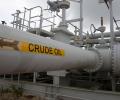
Crude oil shipments from the US to India rose to the highest levels in November since the conflict began in Ukraine in late February, sparking hopes of a resurgence in oil flows from the US to the subcontinent, reveals shipping data. Shipments from the US have surged as Western nations prepare to impose additional sanctions on Russian crude flows. The US shipped around 450,000 barrels per day of crude last month to India, twice that of shipments in October, according to data from London-based commodity intelligence provider Vortexa.

The government on Friday slapped an export tax on petrol, diesel and jet fuel (ATF) while also joining nations like the UK in imposing a windfall tax on crude oil produced locally. A Rs 6 per litre tax on export of petrol and ATF and Rs 13 per litre tax on export of diesel is effective from July 1, finance ministry notifications showed. Additionally, a Rs 23,250 per tonne tax was levied on crude oil produced domestically.

India's top oil and gas producer ONGC wants the government to scrap windfall profit tax levied on domestically produced crude oil and instead use the dividend route to tap into bumper earnings resulting from surge in global energy prices. The firm also favours a floor price for natural gas at $10 per million British thermal unit -- the current government-dictated rate -- to help bring deposits in challenging areas to production, two sources aware of the matter said. State-owned Oil and Natural Gas Corporation (ONGC) management during discussions with government officials stated that levying windfall profit tax on domestic oil producers, while at the same time reaping rich savings from buying discounted oil from Russia was unfair.

EAM Jaishankar's mission is aimed at strengthening India's strategic autonomy in a complex international environment, observes Ambassador M K Bhadrakumar.

A looming global shortage of diesel in Europe presents India with more than one opportunity to profit from strong margins. A shortage of the fuel, a key contributor to inflation, has been exacerbated by the conflict in Ukraine, and western sanctions on Russian fuel supplies. The slowdown in natural gas supply means the West needs diesel to heat their homes this winter.

Foreign policy is always a work in progress and ups and downs are built into foreign policy process. What is permanent is national interest. Hopefully, this year, which will also witness general elections in the country, will also clear clouds in the foreign policy horizon, observes Rup Narayan Das.

The windfall tax on oil produced within India and fuel exported overseas will make up for more than three-fourths of the revenue that the government lost when it cut excise duty on petrol and diesel to cool soaring inflation, industry sources said. India on July 1 joined a select league of nations globally that have taxed windfall gains accruing to oil companies from soaring energy prices. The government slapped a Rs 6 per litre tax on the export of petrol and jet fuel (ATF) and Rs 13 a litre on the export of diesel effective July 1. Additionally, a Rs 23,250 per tonne tax was levied on crude oil produced domestically.

The rupee depreciated further by 13 paise to hit a new life-time closing low of 82.30 against the US dollar on Friday as a firm American currency and risk-averse sentiment among investors weighed on the local unit. Moreover, a negative trend in domestic equities and elevated crude oil prices sapped investor appetite, forex traders said. At the interbank foreign exchange market, the local currency opened at 82.19, then fell further to 82.43. It finally settled at an all-time low of 82.30 against the American currency, registering a decline of 13 paise over its previous close.

Tea planters and exporters are "extremely worried" over the possible impact on their shipments to Russia, India's second largest buyer of tea, in the wake of the Russia-Ukraine crisis. Western sanctions and disruption of payments in dollars as well as transhipments to Russia are expected as a fall-out of Russia launching an attack on Ukraine on Thursday. "The Russian market for Indian tea is extremely important as there are payment issues for shipments to Iran, another vital tea export destination. "Around 18 per cent of India's tea shipments go to Russia," India Tea Association chairperson Nayantara Palchoudhuri told PTI.

Given that India will get a huge part of its oil supplies from Iran through its government-owned oil PSUs, any unwelcome shocks in global crude rates could be absorbed well enough.

International oil prices surged close to $100 a barrel on Tuesday after Russian President Vladimir Putin sent troops into Ukraine, but petrol and diesel prices in India continue to be on freeze and are expected to rise once assembly elections in states like Uttar Pradesh end. Amid fears of supplies being disrupted because of Russian aggression, the price of futures contract for Brent crude oil with April delivery on London's ICE rose by 4.18 per cent to $99.38 per barrel on Tuesday morning, before paring some gains to settle just above $98. The last time Brent exceeded $99 per barrel was in September 2014. Russia makes up for a third of Europe's natural gas and about 10 per cent of global oil production.

India's macroeconomic situation has benefited from oil prices' decline.

The dreary, cold months from December to February may prove to be the undoing of many a nation as they grapple with sky-high fuel prices - a result of the Ukraine conflict and the pandemic. Many - Europe, South Korea, Japan, and China - will still pull through on the strength of their wealth or because of strong storage infrastructure. But India will have its back to the wall. Signs of liquefied natural gas (LNG) rates hitting new records this winter are already evident.

Since October, FPIs have sold over $26 billion worth of stocks, which is the largest selling ever seen in India, observes Akash Prakash.

After selling dollars for the past few months, the Reserve Bank of India (RBI) may take a hands-off approach before its annual account closing by not trying to prop up the rupee as geopolitical tensions show signs of stabilising with global crude oil prices easing from its $140 peak. The central bank was a net buyer of dollars between April and September, and then turned a net seller in the following months, the data released by the RBI showed. The RBI continued to be a net buyer of $36.6 billion in this fiscal year - between April and January. In 2020-21, it purchased $68 billion on a net basis.

'This is a good time to restructure your portfolio because the sectors and stocks that performed in the last bull market may not perform as much now.'

New Delhi should resist any temptation to act as spoiler and instead should cooperate with its SCO partners in reaching a regional consensus behind the formation of an interim government in Kabul, argues Ambassador M K Bhadrakumar.

The broader markets underperformed benchmark indices as the BSE Mid-cap and Small-cap tumbled over 2%.

Because of India's weak fiscal position, the plethora of debt-burdened infrastructure companies and the poor asset quality of public sector banks, economic growth in 2015-16 may be limited to about six per cent, say Shankar Acharya.

A theory that is doing the rounds is that with election nearing, this depreciation of the rupee will allow politicians of all hues to bring back their ill-gotten wealth.

'Clearly, from the Indian viewpoint, the US retrenchment from Asia cannot be happening as good news.' 'The abandonment of the US' pivot to Asia exposes the US-Indian partnership to be a mere transactional relationship,' says Ambassador M K Bhadrakumar
 © 2026 Rediff.com - Advertise with us - Disclaimer - Privacy Policy - Sitemap - Feedback - About us - Terms of use - Grievances